
How to Remove Wine Stains From Carpet Without Scrubbing?
Key Takeaways
- Act quickly before the wine dries into the fibres.
- Blot the spill instead of rubbing the carpet.
- Use a clean white cloth to avoid colour transfer.
- Test any cleaning solution on a hidden area first.
- Work from the outside of the stain towards its centre.
- Avoid excessive water and harsh cleaning chemicals.
- Do not use heat until the stain has been removed.
- Consider professional carpet cleaning for stubborn stains.
To make matters worse, when wine gets spilt on a spotless floor covering, it is likely that no time will be needed before a big mess occurs. If you go about cleaning it by scrubbing because it seems like the quickest way, you might make things worse. That is because scrubbing not only pushes the stain around but also allows the liquid to penetrate the carpet fibres more deeply. For stubborn wine stains, professional Carpet Cleaning Brisbane services can help remove the stain while protecting the carpet fibres.
Through this post, we intend to inform you about how to remove wine stains from carpet and how to do it without any scrubbing. You will find out what not to do and when professional carpet cleaning may be able to assist you.
Act Quickly After The Spill
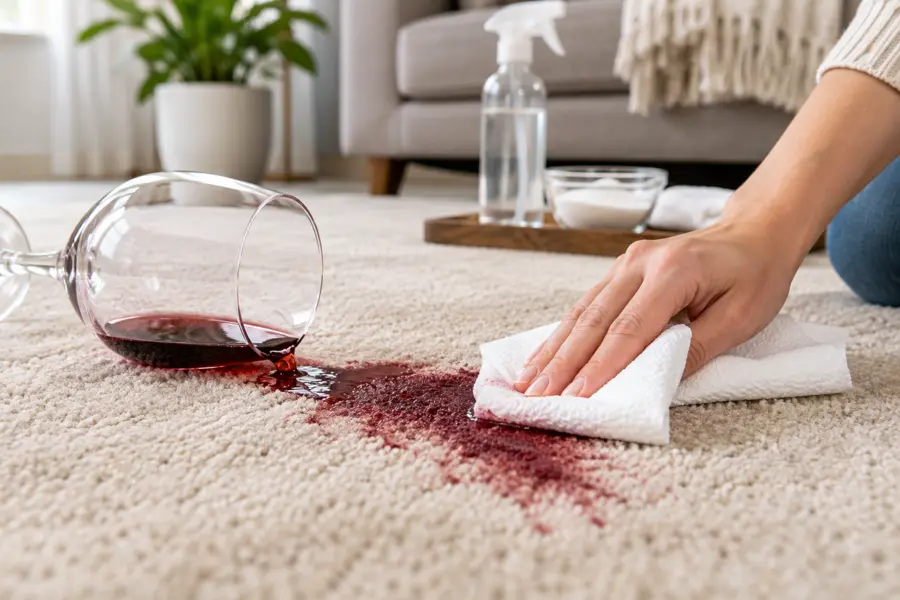
Recent wine stains are easier to get off compared to those stains that already look old. If wine has stained the carpet for quite some periods, mostly in contact with the carpet fibres, it might be really tough to get it out and you will need to apply a special product or method. Before everything else, put aside the furniture or objects in the vicinity of the spill as they may get soaked. Then soak up as much liquid with a clean dry white cloth. Press and lift the cloth gently and repeatedly. Don’t scrub back and forth. Change to a clean part of the cloth as it becomes wet. This helps to restrict the dispersal wine on the carpet.
Why Scrubbing Can Make Things Worse
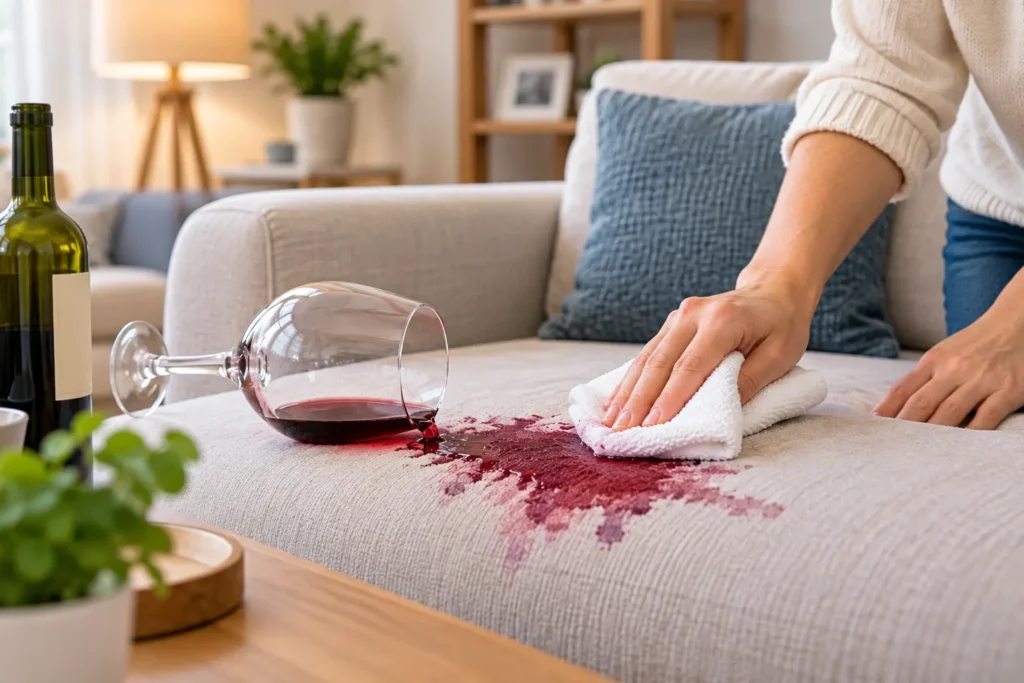
Rubbing makes the fabric and carpet fibers rub against each other. This can cause the wine to be spread all over the place including outside the area of the original spill. It might also leave the carpet’s appearance altered or break the fine fibres. Rubbing can also force the liquid farther down into the pad. This makes stain removal more difficult later. Most carpets are safe to gently blot them. It absorbs the liquid without roughly shaking the fibres. Continue the process of blotting with a dry absorbent material until very little liquid can be extracted out of the carpet if it is a large stain or spill.
Blot The Wine Carefully
After the initial draining you do not need to stop blotting. Get a new, white cloth or something similar, lay the absorbent material on the stain and gently press it into the pile. Lift rather than pull across the carpet. Continue with fresh portions of the cloth. Let up until there’s little or no colour from the wine coming off on the fabric. You don’t want this phase of the cleaning process to soak the carpet with. That is, for example, you may have spilled a glass of red wine. Then maybe you did one step after another. Using this way the stain will not spread any more. It also minimizes the risk of spreading in the process of cleaning.
| Step | What to do |
| 1 | Remove excess wine quickly |
| 2 | Use a clean white cloth |
| 3 | Blot gently |
| 4 | Change the cloth frequently |
| 5 | Work towards the centre |
| 6 | Allow the area to dry |
Choose A Suitable Cleaning Solution
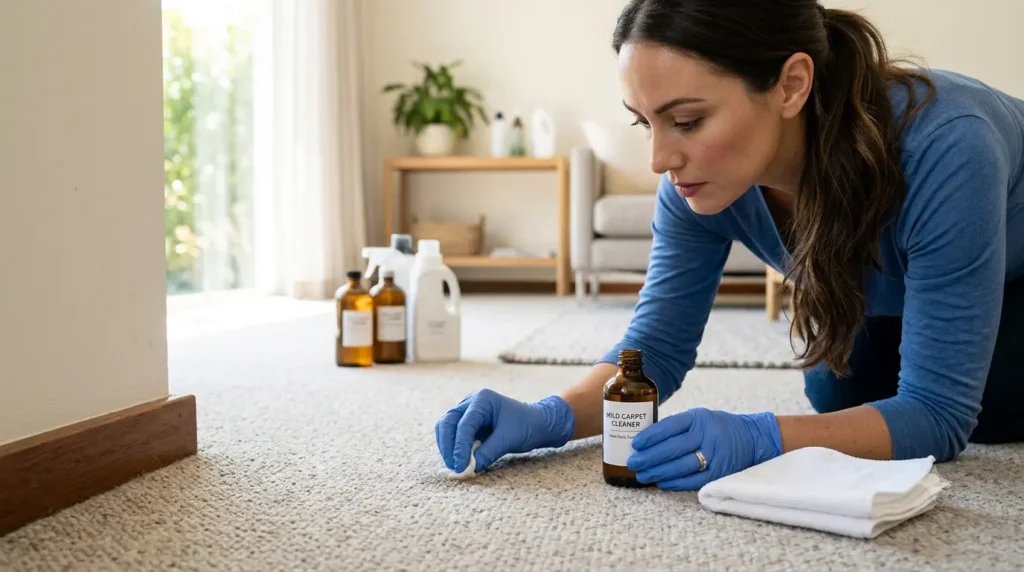
After draining off the excess liquid, then you can think about a suitable carpet cleaning solution. Which product is suitable depends on the type of carpet fibre and the manufacturer’s care label. You should always test on the carpet label using the new substance. If unsure, initially try the cleaning liquid on a tiny spot which is difficult to detect. Spread a small amount of the liquid and observe closely the color shifting and the destruction of carpet fibers. Don’t blend the detergents. Various combinations may result in negative outcomes or harm to the fabric of the carpet. A mild is usually better to approach when dealing with household spill.
Try A Mild Solution First
To restore a rug to its original condition, you can make a small amount of the solution for a very faint liquid dishwashing and mix it with water. This can help remove remaining wine after the initial blotting. For Brisbane households, choosing a carpet-safe approach is important when dealing with different carpet fibres and colours. It is better to use a clean cloth to apply the solution on the rug than to pour it directly on the rug. Lightly tap the stained spot. Don’t wet the carpet. Then blot with a second clean and slightly moist cloth. This is on account of the rest of the cleaning solution. You should always do a test first as carpets differ in fibre, dye and construction.
Work From Edges Inward
Cleaning direction can cause dust differences. Start from the wine stain’s outer border and gradually move inward. This helps the damaged tissue not to spread. Do stop when you switch from dabbing to rubbing movements up and down have you got that picture in your head. Change as dirty as you work the end of the cloth.If your cloth has gotten dirty to the point of effectiveness, replace or wash it. Repeat as long as the human eye can still see some residue. Be patient, since as long as you’re dabbing gently and repeatedly, you’re better off applying less pressure than more.
Rinse And Dry The Area
Once you have handled the stain, take the cleaning liquid off as the first step, just pour water and then use a fresh cloth to wipe the carpet down. Do not pour water or soak, only dab the areas with water. After that, use a dry cloth and dab it on the carpet. This will take away most of the wetness. An air-conditioned room will definitely help the carpet to dry in no time. If you have the chance, open up the windows and doors. When you think you are done, let the rug dry completely. This visual difference makes it very hard to know for sure whether the dirt is there or not.
Handle Dried Wine Stains
Dried wine stains could be more tricky than fresh ones to remove as they generally take greater time and effort. To initiate the cleaning process, use the scraper to remove any dry wine particles which are sticking out from the surface of the carpet. Be very gentle not to cause damage to the fibers. Slightly wet a clean cloth with a suitable solution that won’t damage your carpet. If the stain is very deep, the result may not be as expected with domestic treatment. A professional carpet cleaning treatment can be more comprehensive. The cleaners have the ability to test the fibre type and find a suitable course of treatment for it.
Avoid These Common Mistakes
To name a few, some popular stain-removal products are actually damaging your carpets. Be careful with the scrubbing because the fibres may be torn from too much friction and the stain may even spread. Water should not be poured on the carpet too recklessly. Water, if in quantity, reaches the backing and so the carpet does not dry as quickly. Try a test run if possible before doing the whole carpet for these reasons: bleach can cause some carpets colours to fade. You should also never mix cleaning chemicals. And don’t apply too much heat to hurry drying.
| Avoid | Why |
| Hard scrubbing | Can spread wine and damage fibres |
| Excess water | May cause prolonged dampness |
| Bleach | Can discolour carpet |
| Mixed chemicals | May create harmful reactions |
| Excessive heat | Can affect some carpet materials |
| Coloured cloths | May transfer dye |
Know When To Call Professionals
Certain wine stains are tough to be cleared using household solutions. This includes if the stain is dry or has set. Fragile rugs might also need expert attention. A professional carpet cleaner may test the carpet prior to selecting a cleaning method. This reduces risk of damage to fibres or colours. Cleaning by professionals can also be beneficial when residue has been left by previous attempts to clean the sample. Stubborn carpet stains such as these may well be worth the extra attention if you are getting a rental property ready for an inspection. Never treat the stain history to the cleaner in advance of treatment.
Conclusion
Eliminating wine from carpet doesn’t always mean you should get down and dirty. A clean liquid spill can be gently blotted up and stopped before it spreads too far. We should use the right kind of products for the task and check how the product will affect the material by testing it on a small concealed piece of the carpet. Use just the minimum needed amount of solution and start from the very outside in. When dry, expose the carpet to natural air flow. If after all your attempts there’s still a wine stain, then the best option for getting the service would be to send it to the cleaners. For more advice, read our guide on how to remove carpet stains in high-traffic office areas.
Frequently Asked Questions
1. How do you remove wine stains from carpet?
Blot the spill immediately with a clean white cloth. Avoid scrubbing, then use a suitable carpet-safe cleaning solution if needed.
2. Can red wine stains be removed without scrubbing?
Yes, gentle blotting can remove much of a fresh spill without damaging carpet fibres or spreading the stain.
3. What removes dried wine stains from carpet?
A suitable carpet stain remover may help with dried wine. Always test the product first and follow the manufacturer’s instructions.
4. When should I call a professional carpet cleaner?
Consider professional cleaning when the stain is large, dried, deep or remains after careful home treatment.
Related Posts

8 Dust-Free Living: Spring Cleaning Checklist For the Home
Have you ever noticed that even when always cleaned, your house still seems to be…

Cluttered Home? Cleaning Tips to Make It Feel Bigger
Cluttered Home Cleaning Tips To Make It Feel Bigger That tight squeeze between four walls?…
The Smart Way to Set Up a Weekly Cleaning Routine
Have you ever felt that your house is dirty again only one or two days…